Working with Water to Restore Life

Every landscape carries its own rhythm, shaped quietly by water. It moves across slopes, settles into soil, and sustains life in ways that are often invisible but deeply legible to those who observe carefully. At Afforestt, working with water begins by reading these patterns through landform, vegetation, and subtle ecological cues. By understanding how water flows, pauses, and returns, we design interventions that restore balance rather than disrupt it. As natural hydrological cycles are reconnected, soils recover, vegetation strengthens, and entire landscapes regain the capacity to support life once again.

Category

Permanent Hydration Strategy

Ecology and Flora

Adaptable to diverse ecosystems

Location

WORLDWIDE

Highlights

Reading rhythms

Tracing the flow of water above and below ground.

Living maps

Using plants and animals as indicators of water’s movement.

Designing with nature

Shaping restoration through soil, slope, and vegetation.

Water and its relations

Bringing soil, vegetation, and water back into balance.

From observation to action

Turning field insights into site-specific designs.

Impact

Rajasthan: Reawakening Drylands

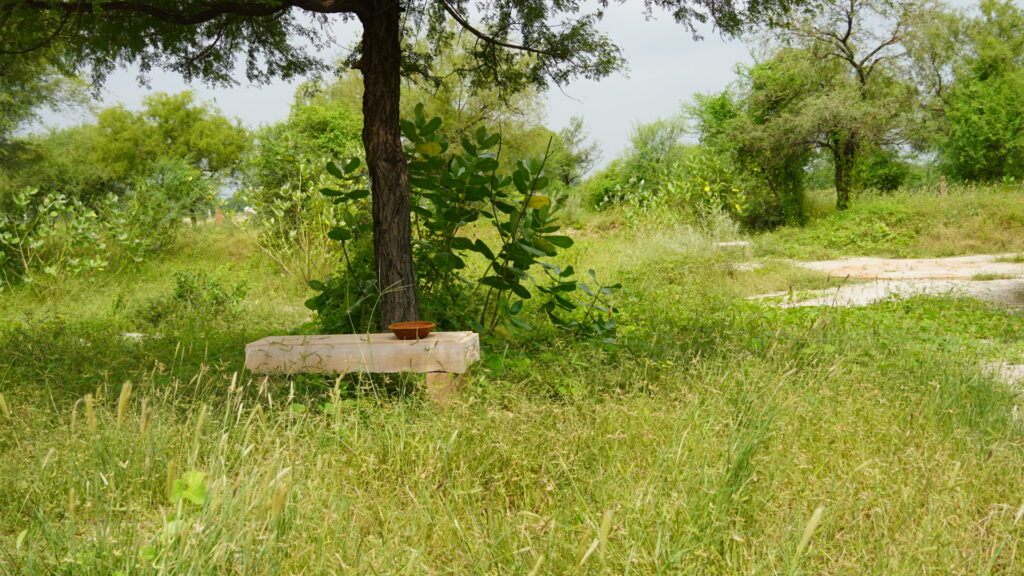
In the Luni River Basin, we learned from centuries-old water systems—stepwells, naadis, and beris that once sustained villages. By reading slopes, soils, and keystone vegetation, we designed catchments that slowed runoff, recharged groundwater, and invited grasses and shrubs to return. Even salination reversed, and wild animals gathered in large numbers to drink from the naadis we restored. In Sardar Samand, overgrazing, invasive Prosopis juliflora, and years of chemical farming had damaged soil and water. Here, we designed water catchments and planted native grasses and millets to hold soil, capture dew, and build organic matter. Small depressions became ponds in times of rain, teaching us how slowing water allows the land to drink again. Further west in Jasol, we created a network of naadis, flow channels, and sediment ponds, paired with careful planting. Even harsh soils responded: native grasses, insects, and birds returned, guiding water deeper underground and spreading resilience across the landscape.

IMG_7258
Shivalik Foothills: Holding Back the Rush

Near Sukhna Lake in Chandigarh, the challenge was excess runoff eroding fragile slopes. Our design used contour bunds, check dams, and bands of native vegetation to slow the rush, stabilize soil, and recharge streams. This work reminded us that water design is as much about restraint as it is about flow.
Armenia: Listening to Snow and Stone

In the lower Caucasus and the Armenian highlands, water comes as snow and ice. Here we worked with freeze-thaw cycles, alpine vegetation, and old terracing patterns that once balanced human settlements with natural hydrology. By aligning with these rhythms, restoration became not an imposition but a continuation of traditions the land itself had sustained.
How We Work with Water

Our designs combine observation with practical action: 1. Mapping & surveys — LiDAR and drones capture slopes, drainage lines, and fine contours. 2. Catchments & storage — rainfall and runoff studies guide ponds, swales, and recharge systems. 3. Earthworks — swales, bunds, and trenches slow water, reduce erosion, and allow infiltration. 4. Cultural nodes — stepwells, beris, and open wells are built or revived as water storage and recharge points. 5. Soil & vegetation studies — percolation tests, lateral flow studies, and phytosociology reveal how water moves underground. These methods turn landscapes into living water maps, guiding us to place each structure where it can do the most good.

More Projects